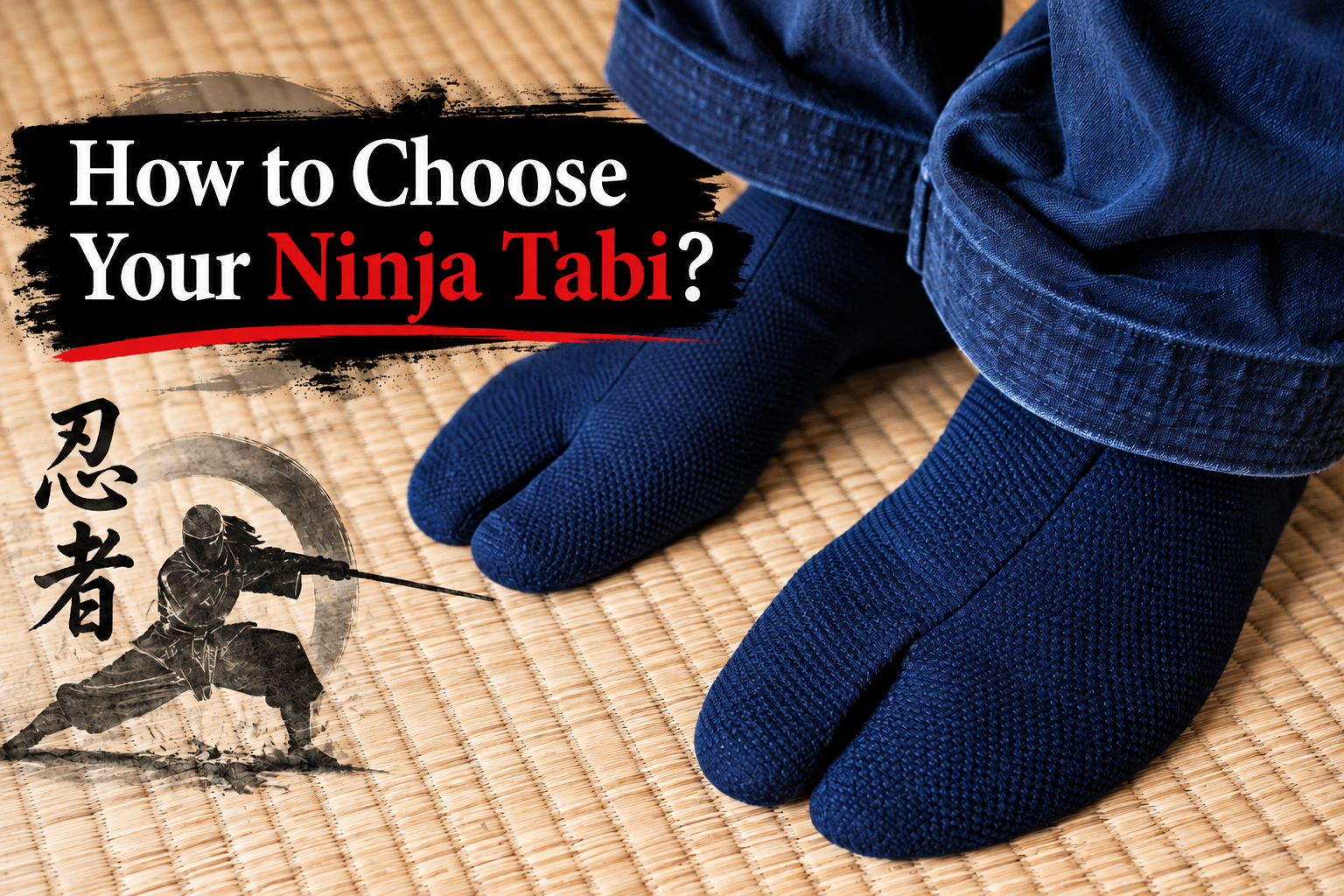
How to Choose Your Ninjutsu Tabi? Complete Guide for Dojo and Training
Choosing the right pair of Ninjutsu tabi is not only about color or size. For regular practice, you should also consider the material, inner lining, season, type of training clothing, intensity of practice, and training environment: dojo, tatami, wooden floor, outdoor practice, or training with waraji.
In this guide, NinjutsuShop.com explains how to choose tabi suited to your Ninjutsu practice, whether you train in Bujinkan, Genbukan, Jinenkan, or another Japanese martial arts school.
Tabi or Jika-Tabi: What Is the Difference for Ninjutsu?
Before choosing a model, it is important to understand the difference between traditional tabi and jika-tabi.
Traditional Tabi
Tabi are traditional Japanese split-toe footwear separating the big toe from the other toes. They do not have a thick rubber outsole comparable to that of a modern shoe.
For Ninjutsu, they are particularly suitable for:
- dojo training;
- practice on tatami mats;
- clean wooden floors;
- footwork and body movement training;
- traditional use with waraji sandals;
- certain shinobi shozoku training outfits.
Jika-Tabi
Jika-tabi feature a real rubber outsole and are designed to be worn directly outdoors.
They are generally more suitable for training on:
- soil;
- grass;
- gravel;
- trails;
- forest terrain;
- urban outdoor surfaces.
For practitioners who train both indoors and outdoors, it is often preferable to own one pair of traditional tabi for indoor practice and one pair of jika-tabi for outdoor training.
Which Material Should You Choose for Ninjutsu Tabi?
The material directly affects comfort, breathability, durability, drying time, and ease of maintenance. Depending on the model, Japanese tabi may be made from 100% cotton, polyester, or a cotton-polyester blend often sold in Japan under names such as Tetoron or Tetron.
100% Cotton Tabi
100% cotton is an excellent choice for practitioners looking for a natural and traditional feel.
Its main advantages include:
- good breathability;
- natural moisture absorption;
- a comfortable feel against the skin;
- good sensitivity and contact with the floor;
- a traditional appearance well suited to Japanese clothing.
Cotton is especially suitable for dojo training, long technical sessions, and use with traditional Japanese training clothing.
However, 100% cotton tabi may take longer to dry than synthetic blends and may shrink slightly depending on the fabric and washing method.
Polyester Tabi
Polyester is valued for its durability, dimensional stability, and easy maintenance.
Depending on the construction of the model, it may offer:
- good resistance to repeated use;
- relatively fast drying;
- better stability after washing;
- easy maintenance for practitioners who train frequently.
Polyester can be a practical choice for regular or intensive training when durability and ease of care are priorities.
Tetron / Tetoron Tabi
The term Tetoron originally refers to a polyester fiber developed and marketed in Japan. In Japanese retail, terms such as Tetron or Tetoron broadcloth are also commonly used for polyester fabrics or polyester-cotton blends.
A common example is a fabric composition close to:
65% polyester / 35% cotton
This type of fabric aims to combine:
- the durability and dimensional stability of polyester;
- the comfort of cotton;
- faster drying than heavier cotton fabric;
- good long-term durability.
For practitioners who train several times a week, a cotton-polyester tabi can be an excellent balance between comfort, durability, and easy maintenance.
Sarashi or Neru: Which Tabi Lining Should You Choose?
A common source of confusion concerns the Japanese terms Sarashi and Neru.
They do not refer to the outer sole of the tabi. They mainly describe the type of inner lining used in the upper part of the tabi.
Sarashi – 晒裏: Lightweight and Breathable
Sarashi (晒裏, sarashi-ura) is a relatively thin, smooth, and breathable lining.
It is especially suitable for:
- spring;
- summer;
- heated dojos;
- intensive training that generates a lot of body heat;
- practitioners looking for lightweight tabi.
For regular dojo practice, Sarashi is generally the most versatile choice.
Neru – ネル裏: Warm Lining for Winter
Neru (ネル裏, neru-ura) uses a brushed or slightly fleeced lining that retains more warmth.
It is especially useful for:
- autumn and winter;
- cold dojos;
- early morning outdoor training;
- practitioners who are sensitive to cold.
For winter training in an unheated Japanese dojo or outdoor practice in cold weather, Neru-lined tabi generally provide better thermal comfort.
Sarashi vs Neru: Quick Comparison
| Feature | Sarashi 晒裏 | Neru ネル裏 |
|---|---|---|
| Thickness | Thin | Thicker |
| Breathability | Very good | More limited |
| Warmth | Light | High |
| Recommended season | Spring / Summer / Mild weather | Autumn / Winter |
| Intensive training | Very suitable | Best in cold conditions |
| Cold dojo | Possible | Recommended |
Which Sole Should You Choose for Ninjutsu Tabi?
Unlike jika-tabi, traditional tabi generally do not have a thick rubber outsole.
The bottom of the foot is usually made from specially reinforced textile designed to better withstand friction.
In traditional Japanese manufacturing, different reinforced fabrics may be used, including materials such as Unsai (雲斎) or Sugi, depending on the manufacturer.
For Ninjutsu training in the dojo, look for:
- a sufficiently durable textile sole;
- an appropriate thickness that preserves floor sensitivity;
- strong stitching;
- a construction that does not restrict the natural movement of the foot.
For direct outdoor use without additional footwear, choose jika-tabi with rubber soles instead.
Which Tabi Should You Choose According to the Season?
Spring
Cotton or cotton-polyester tabi with a Sarashi lining are generally an excellent choice.
Summer
For hot and humid training conditions, choose:
- a lightweight construction;
- Sarashi lining;
- breathable fabric;
- a pair that can be washed regularly.
For intensive summer training, owning two pairs can also be useful, allowing one pair to dry completely while the other is being used.
Autumn
The best choice depends mainly on the temperature of your dojo. Sarashi remains suitable in mild conditions, while Neru becomes more useful as temperatures begin to drop.
Winter
In a cold dojo or during outdoor winter training, Neru is generally preferable because of its warmer lining.
A slightly thicker pair may feel different around the foot, so a precise fit remains important without excessive compression.
Which Tabi Should You Wear with a Keikogi or Shinobi Shozoku?
With a Keikogi
For regular training in a keikogi, functionality should be the main priority.
A black or dark blue model that is comfortable, durable, and easy to maintain is generally suitable for regular practice.
For several training sessions per week, a cotton-polyester model can be especially practical because of its durability and ease of care.
With a Ninja Outfit or Shinobi Shozoku
When wearing a shinobi shozoku or a traditional-inspired training outfit, visual harmony between the trousers, kyahan, and tabi may also be important.
Black or indigo blue models are generally the easiest to combine with this type of outfit.
If your outfit uses kyahan or traditional leg coverings, choose tabi whose height and fastening system provide a clean and secure fit around the ankle.
Kohaze or Velcro: Which Fastening System Should You Choose?
Kohaze – 小鉤
Kohaze are the traditional metal clasps located at the back of the tabi. They hook into textile loops that usually allow several levels of adjustment.
Their main advantage is precise support around the ankle.
They are especially suitable for:
- practitioners looking for traditional Japanese tabi;
- wearing with a shinobi shozoku;
- wearing with waraji;
- practitioners who prefer precise ankle adjustment.
Velcro
Velcro fastenings provide a modern alternative that allows the tabi to be put on and removed quickly.
They can be particularly practical for:
- frequent training;
- seminars;
- beginners;
- situations where the tabi need to be removed regularly.
The choice between kohaze and Velcro therefore mainly depends on the level of traditional construction you prefer, comfort, and ease of use.
Which Tabi Should You Choose for Wearing Waraji?
The split-toe construction of tabi allows the straps of traditional Japanese waraji sandals to pass between the big toe and the other toes.
If you use waraji for traditional practice or specific outdoor training, choose tabi that are:
- well fitted to the foot;
- free from excess fabric around the toes;
- made from fabric resistant to friction;
- constructed with strong seams;
- secure around the ankle.
For intensive use, durable 100% cotton or certain resistant cotton-polyester blends may be particularly suitable.
Waraji do not provide the same protection as modern outdoor footwear. On difficult, rocky, or urban terrain, jika-tabi are generally more appropriate.
Which Tabi Should You Choose According to Training Intensity?
Occasional Practice
For occasional training once or twice a week, comfortable cotton or cotton-polyester tabi with Sarashi lining will suit most practitioners.
Regular Practice
For several training sessions per week, look for:
- reinforced stitching;
- durable fabric;
- good shape retention;
- a model that is easy to wash and dry.
Owning two pairs also allows you to alternate between sessions and avoid training in tabi that are still damp after washing.
Intensive Practice
For instructors, advanced practitioners, and those who train almost daily, priority should be given to:
- fabric durability;
- strength of the textile sole;
- quality of stitching;
- secure fit;
- ease of maintenance.
A cotton-polyester model or a high-quality heavy cotton tabi can be especially suitable.
Black or Indigo Tabi: Which Color Should You Choose?
For modern Ninjutsu practice, the most commonly used colors are black and indigo blue.
Black Tabi
They are easy to combine with:
- a black keikogi;
- a black shinobi shozoku;
- black kyahan;
- most training equipment used in modern Ninjutsu schools.
Indigo Tabi
Indigo blue has a long history in Japanese textile culture and pairs particularly well with traditional Japanese workwear and certain martial arts training outfits.
The choice between black and indigo is therefore mainly aesthetic and should depend on your training clothing and dojo customs.
How to Choose the Right Tabi Size
Japanese tabi sizes are usually indicated directly in centimeters.
A size 25 cm therefore corresponds approximately to a foot measuring 25 cm, although foot shape, width, and the manufacturer's construction should also be considered.
To measure your foot:
- Place a sheet of paper against a wall.
- Place your heel against the wall.
- Stand normally with your weight on the foot.
- Mark the end of your longest toe.
- Measure the distance between the wall and the mark.
- Measure both feet and use the larger measurement.
Tabi used for Ninjutsu should be snug without compressing the toes. Tabi that are too large can create folds under the foot and interfere with movement, while tabi that are too tight can become uncomfortable during long training sessions.
Which Ninjutsu Tabi Should You Choose? Quick Guide
| Use | Recommended Choice |
|---|---|
| Year-round dojo training | Cotton or cotton-polyester, Sarashi |
| Summer dojo training | Lightweight cotton, Sarashi |
| Cold dojo in winter | Cotton or cotton-polyester, Neru |
| Intensive training | Durable cotton or cotton-polyester |
| Shinobi Shozoku | Black or indigo, kohaze |
| Keikogi | Black, easy-care fabric |
| Waraji | Close-fitting, durable tabi, preferably kohaze |
| Outdoor training on difficult terrain | Jika-tabi with rubber outsole |
| Daily practice | Two pairs in rotation recommended |
Why Buy Your Ninjutsu Tabi from Japan?
NinjutsuShop.com specializes in equipment for practitioners of Ninjutsu and Japanese martial arts.
Based in Japan, we select models from Japanese manufacturers and suppliers specializing in traditional footwear and martial arts equipment in order to offer tabi suited to the practical needs of martial artists.
Depending on availability, our selection includes:
- black tabi;
- indigo tabi;
- cotton tabi;
- cotton-polyester tabi;
- Sarashi-lined models;
- Neru-lined winter models;
- traditional kohaze fastenings;
- quick-fastening models;
- jika-tabi for outdoor training.
Our goal is to help practitioners choose equipment according to their real training needs, not only its appearance.
How to Care for Your Ninjutsu Tabi
Proper maintenance helps preserve the fit, stitching, and lifespan of your tabi.
After Training
Allow your tabi to dry and air out before storing them, especially after intensive practice.
Washing
Always follow the manufacturer's specific care instructions. For cotton models, gentle washing at low temperature or hand washing can generally help reduce shrinkage and premature wear.
Avoid aggressive detergents and high temperatures unless specifically recommended by the manufacturer.
Drying
Natural air drying in a well-ventilated area is usually preferable.
Excessive heat may cause natural fibers to shrink and accelerate material wear.
Inspection
Regularly check:
- the stitching around the toes;
- the fabric under the foot;
- the kohaze clasps;
- the fastening loops;
- areas exposed to repeated friction.
A small repair carried out early can prevent further damage.
FAQ – How to Choose Ninjutsu Tabi
What Are the Best Tabi for Ninjutsu Training in a Dojo?
For regular dojo training, choose close-fitting tabi with a flexible textile sole, made from cotton or cotton-polyester. Sarashi lining is particularly suitable for versatile use and intensive training.
What Is the Difference Between Tabi and Jika-Tabi?
Traditional tabi have textile soles and are mainly suited to indoor training or use with traditional sandals. Jika-tabi feature a real rubber outsole and are designed for direct outdoor use.
Which Material Is Better: Cotton or Polyester?
Cotton offers breathability and a natural feel. Polyester provides durability, dimensional stability, and easy maintenance. A cotton-polyester blend often provides a good balance for regular training.
What Is Tetron Tabi?
The term Tetron or Tetoron is used for certain fabrics containing polyester. Tabi sold under this name may use polyester-cotton blends that provide durability and easier maintenance.
What Is the Difference Between Sarashi and Neru?
Sarashi is a lightweight and breathable lining, especially suitable for warm or mild temperatures. Neru is a warmer, lightly brushed lining generally preferred during colder seasons.
Are Sarashi and Neru Types of Tabi Sole?
No. Sarashi and Neru refer to the inner lining of the tabi, not the outer sole. The section under the foot usually uses a separate reinforced textile fabric.
Can You Wear Traditional Tabi Outdoors?
Traditional tabi can be used with waraji or in specific traditional training contexts, but they are not designed to protect the foot like modern outdoor footwear. For regular training directly on soil, gravel, stone, or urban surfaces, jika-tabi are generally more suitable.
Which Tabi Are Best for Winter?
For a cold dojo or winter practice, choose a model with Neru lining whenever possible.
Which Tabi Are Best for Summer?
In summer, choose lightweight and breathable tabi with Sarashi lining, especially if your training sessions are physically demanding.
Which Tabi Should You Wear with a Shinobi Shozoku?
Black or indigo tabi with traditional kohaze fastenings pair particularly well with a shinobi shozoku and traditional kyahan.
Can You Wear Waraji with Tabi?
Yes. The split-toe construction of tabi is compatible with the strap structure of traditional waraji. For this purpose, choose close-fitting tabi with durable fabric and strong stitching.
Conclusion: How to Choose the Right Tabi for Your Ninjutsu Practice
There is no single pair of tabi that is ideal for every practitioner. The right choice depends on your training environment, the season, your clothing, and how frequently you practice.
To summarize:
- dojo and summer: cotton or cotton-polyester with Sarashi lining;
- cold dojo and winter: Neru lining;
- intensive practice: durable, easy-care fabric;
- shinobi shozoku: black or indigo with kohaze;
- waraji: close-fitting and durable traditional tabi;
- outdoor training: jika-tabi with rubber outsole.
The most important factor is choosing tabi that respect the natural shape of your foot, provide secure support, and match your actual training environment.
Looking for Japanese Tabi for your Ninjutsu practice?
Discover the Ninja Tabi & Ninjutsu Tabi Collection at NinjutsuShop.com, selected in Japan for practitioners of Japanese martial arts.


